
Property Risk Register for HOA & Condo Boards
A filterable property risk register library covering life safety, buildings, operations, vendors, finance, governance, technology, resilience, and projects.
Read the guidePrepare response authority and keep damage, claims, recovery work, and communication traceable.
Use the guides in the order that matches your current decision. Keep the evidence, approval, and next action connected as work moves between the board, management, vendors, and specialists.
A filterable property risk register library covering life safety, buildings, operations, vendors, finance, governance, technology, resilience, and projects.
Read the guideA storm-readiness checklist for Tampa Bay property leaders covering roles, vendors, communications, documentation, continuity, and recovery.
Read the guideA property emergency communications plan with 36 audience, channel, ownership, evidence, accessibility, testing, event, recovery, and closeout controls.
Read the guideA Florida condominium insurance renewal readiness checklist for property records, valuations, claims, mitigation, proposals, deductibles, and board decisions.
Read the guideOrganize a condominium or HOA property-loss record: safety, photos, notice, repair costs, adjuster requests, decisions, and claim closeout.
Read the guideA practical post-storm decision log for Florida condominium and HOA leaders, with 26 evidence, safety, vendor, insurance, finance, and closeout controls.
Read the guidePreserve incident facts, compare the planned and actual response, and assign improvements with owners and verification evidence.
Read the guideKeep FEMA flood-map information, local evacuation zones, current protective orders and property continuity plans separate and traceable.
Read the guidePlan a safe tabletop exercise with bounded scenarios, fictional injects, response roles, access checks and an evidence-based improvement record.
Read the guideFor the issue in front of you, name the responsible sponsor, collect the current source records, list material gaps, and identify the acceptance test. Retain a version of the evidence used at the decision date so later changes remain explainable.
These resources provide operational frameworks. Property-specific technical conclusions, deadlines, funding authority, and coverage decisions need the applicable records and appropriate professional review.
Explore the resource libraryConnect official direction, property exposure, qualified response, communication and usable records. Prepare backup ownership and access before an event. Insurance planning and protective action need distinct sources and decisions.
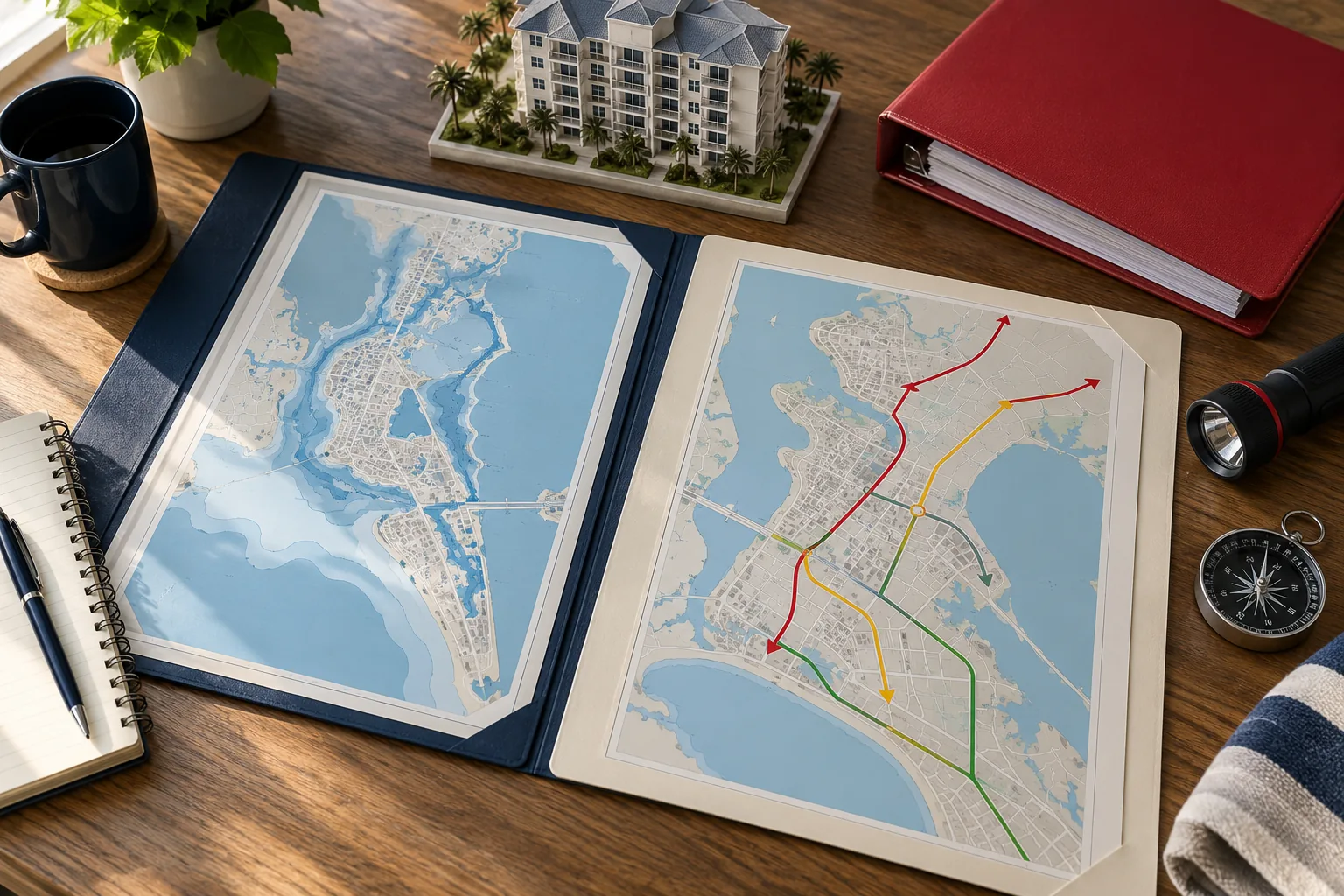
Keep flood and evacuation lookups as separate address-specific records.
Tampa Bay Flood Zones and Evacuation Zones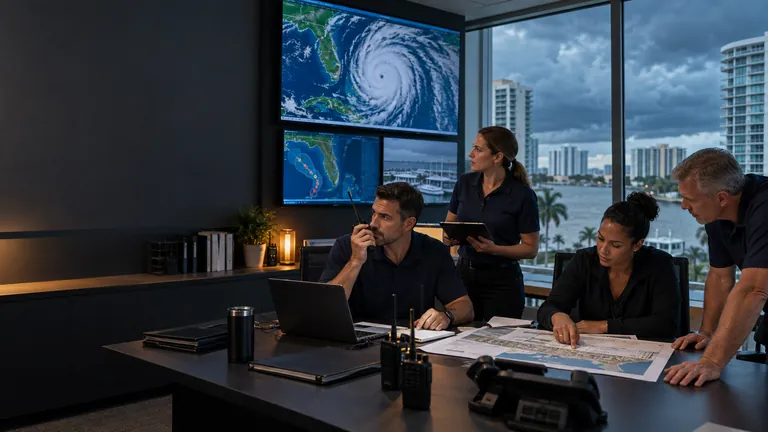
Confirm source ownership, backup access and alternate channels.
Property Emergency Communications Plan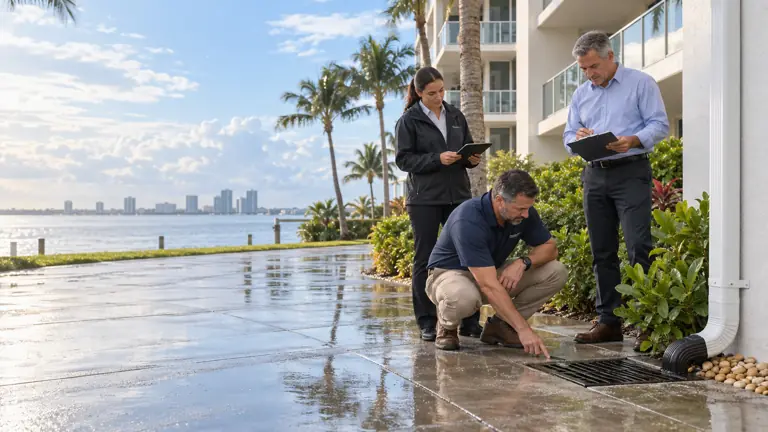
Link observed loss, professional instructions and itemized expenditure.
Post-Storm Recovery Decision Log for Florida PropertiesUse the responsible local authority’s current instruction, issue time and affected area. Record property communications separately.
Authorized access to the plan, current official sources, responder contacts, communication methods and essential records. Test access before an event.
A task being finished does not establish that its output is ready for the next team. Use these checkpoints to keep the evidence, responsibility and release condition connected.
Proposed operating workflow, not a universal legal sequence. Confirm authority, professional requirements and permitted parallel work for your property.
Use this to prepare a rehearsal or review a response plan. During an actual event, current official instructions and the established emergency path govern protective action.
Hypothetical example: A fictional tabletop exercise assumes the office network is unavailable. Participants try to obtain the response contacts through the approved backup channel and record the access gap without interrupting live services.
Retain the scenario, participants' roles, observed access and communication results, recovery evidence and owned gaps. A written plan or successful backup job does not prove the complete response can be executed.
Review the decision brief structureAn emergency plan should survive a failed channel or an unavailable coordinator. Test the route, backup and accessibility method, then record what failed and how the next exercise will verify the correction.
Choose a specific disruption and exercise boundary.
Test the approved primary and backup route.
Record receipt, delays and access problems.
Assign fixes and a repeat-test condition.
A fictional exercise tests 12 communication routes; nine meet the stated receipt and accessibility test. The result is 75%. Investigate the three failed routes and repeat the affected tests. This is a scoped exercise result, not a property readiness rating or a forecast of storm performance.
Original hypothetical arithmetic example. The amounts describe a fictional scenario, not observed property performance or a recommended target.
Continue with Property Tabletop Exercise: Scenario, Decisions and Follow-UpEnter non-negative values using the same scope and period. This calculation stays in your browser tab.
A contact test does not test generator capacity, evacuation access or building condition. Document exactly what was examined.
Protective action follows the current instructions of local authorities. An exercise assumption is not an evacuation instruction.
A second channel is useful only if the intended audience can access it and the backup coordinator knows when to activate it.