
Receive
Log the source, date, location, description, contact details, and attachments. Avoid asking the resident to repeat the story at every handoff.
A reliable request process records the issue, assigns urgency and ownership, keeps the resident informed, and confirms the work actually solved the problem.
Requests arrive by phone, email, portal, staff observation, and board referral. Put them into one controlled queue so that an issue does not disappear because it reached the wrong person.
Capture the location, reported condition, time received, resident contact preference, access constraints, photographs when useful, and any immediate safety concern. Acknowledge receipt with a reference number and the next expected update. Use a separate channel for emergencies that need immediate action.
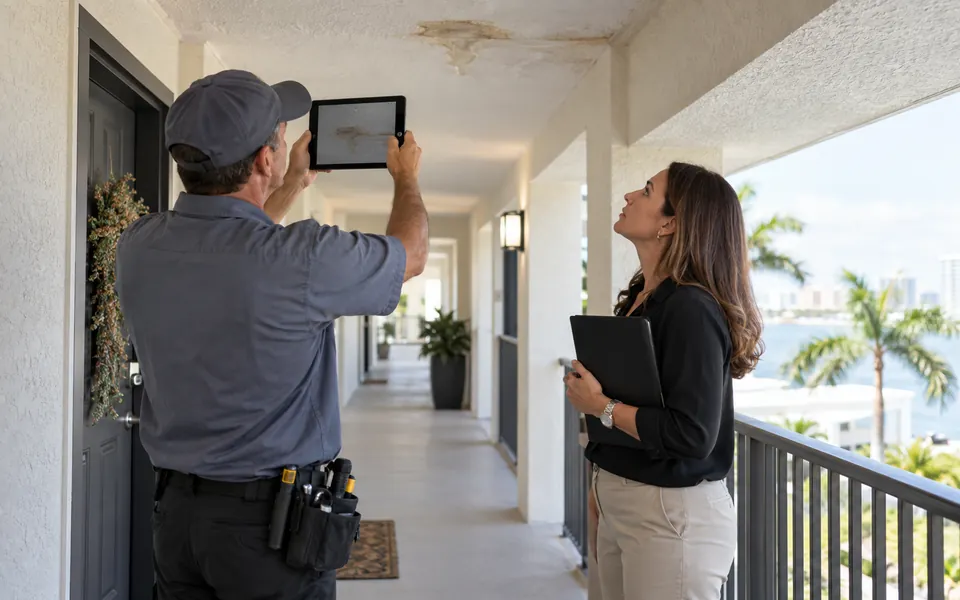
Log the source, date, location, description, contact details, and attachments. Avoid asking the resident to repeat the story at every handoff.
Check for safety, active damage, essential service loss, and accessibility impact. Route urgent cases to the emergency procedure and document interim protection.
Name the person coordinating the response, the party doing the work, the next milestone, and any approval or access dependency.
Use a promised update date even when work is awaiting parts, access, a specialist, or an insurance decision. Explain what is known and what remains uncertain.
Keep work orders, photos, inspection notes, and resident confirmation where appropriate. Distinguish a temporary mitigation from the permanent repair.
Review repeated locations, categories, vendors, overdue items, and reopened requests. Send systemic issues into the maintenance plan and risk register.
Track time to acknowledge, time to first action, aging by urgency, overdue updates, reopen rate, and repeat requests by asset or location. A fast closure rate is misleading if requests reopen or residents have to chase for information. Define each measure consistently before comparing periods or vendors.
Use the KPI library to set definitions, the maintenance planning guide to prevent recurring faults, and the risk register to escalate patterns with material impact.
When the assigned work is complete, the outcome is documented, related safety or access concerns are resolved, and the resident has been told what happened. If only a temporary measure is in place, keep the permanent action open.
Set a frequency based on urgency and the expected duration. Tell the resident the next update date at intake and revise it when the plan changes. A meaningful update can report a confirmed delay and a new action.
A concise trend report: urgent open items, overdue cases, repeats, unresolved dependencies, material resident impacts, and corrective actions. Routine personal details should be handled according to the association’s records and privacy rules.
A request should never disappear between acknowledgment and closure.
Use a small set of statuses such as received, triaged, assigned, awaiting access or vendor, work in progress, pending verification, and closed. Record who can move a request between statuses and what evidence is required. An acknowledgment confirms receipt; it does not promise a completion date that has not been checked.
Measure aging by priority and cause, not only by ticket count. Repeated requests for the same asset may signal a maintenance or vendor issue. When a response depends on a board decision or outside contractor, tell the resident what is known, what remains open, and when the next update is expected. The resident communication standards guide provides a wider framework for consistent messages.
Use these evidence checks to build a property-specific action plan. The rows define controls; they are not completed inspections or verified property findings.
These rows define suggested controls, not completed property findings. Interpret each check against your actual property records, responsible role and acceptance evidence. See the review instructions and reuse terms.
12 checks shown
No check matches those filters. Try a different term or area.
| Review area | Check | Evidence to request | Decision question |
|---|---|---|---|
| Intake | Assign a unique identifier | Received date channel location and factual description | Can the request be traced? |
| Intake | Check urgency | Priority criteria and escalation record | Does the matter require emergency response? |
| Intake | Protect personal details | Access role and minimum necessary information | Who needs this information? |
| Assignment | Name the accountable owner | Work queue and delegated authority | Who owns the next action? |
| Assignment | Identify dependencies | Access vendor approval and parts status | What prevents progress? |
| Communication | Set the next update | Confirmed status and update commitment | Does the resident know when to expect news? |
| Execution | Document attendance and findings | Work record photographs and diagnosed cause | Was the cause understood? |
| Execution | Link repeat reports | Original asset and related request history | Is this a recurrence? |
| Verification | Test completion | Acceptance result and unresolved limitation | Did the intended outcome occur? |
| Verification | Confirm resident update | Closure message and delivery record | Was the outcome communicated? |
| Reporting | Review aged cases | Open age priority owner and blocker | Which case needs leadership action? |
| Learning | Review recurring failure | Root-cause review and preventive action | What change will reduce recurrence? |
Several fictional residents report the same common-area issue. Closing duplicate tickets reduces the apparent backlog without resolving the underlying condition.
Original fictional example · no completed client assignment or property inspection is represented.
| Record to obtain | Review question or calculation |
|---|---|
| Original reports and locations | Link duplicates without deleting their origin |
| Parent incident reference | Retain one accountable service case |
| Status and resident update history | Verify restoration and communicate the outcome to affected reporters |
Useful working output: A connected incident history and visible outstanding service responsibility.
Adapt the record request to authorized access, governing documents and the actual property. The example does not verify any unknown input or replace a professional conclusion.
Maintenance Backlog Triage: Consequence, Readiness and Age · More operations and maintenance examples
Tickets close while residents still report the same problem.
Do not confuse technician activity with restored service.
Trace one request through acknowledgement, access, work and user-facing verification; explain any reopening.
Original proposed coordination checks · adapt to authorized access, the actual obligation and the appropriate professional review. These are not findings about your property.
Follow the related handoff workflow · Read the review definitions
If a leak returns after closure, link the new report to the original asset and work order. Preserve the original completion evidence and ask whether the symptom or underlying cause was addressed.
Use separate statuses for waiting for access, awaiting approval, vendor scheduled, work performed, verification pending, and closed. Each status needs an owner and a next action.
Escalate repeated failures or critical service interruptions through the defined channel. Report aged requests and missing closure evidence alongside total requests handled.
Find checklists and data definitions · Explore operations and maintenance